

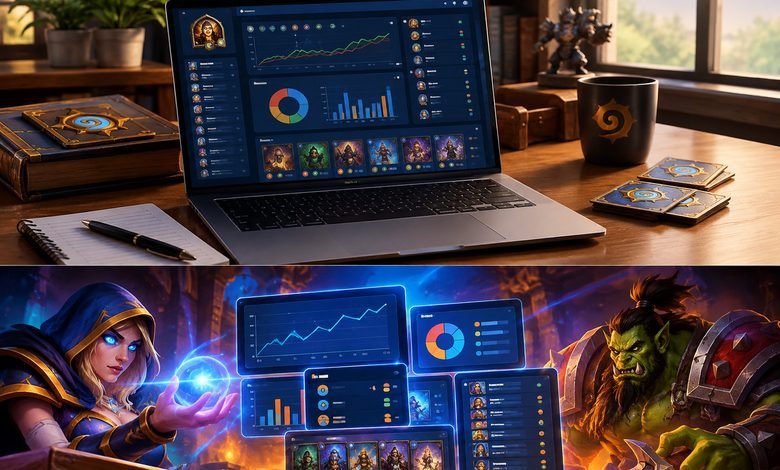
Hearthstone is a game where small decisions can change the result of a match. Players need to understand their decks, watch their win rates, study opponents, and learn from past games. HearthStats is designed around this type of data-driven play. The latest Hearthstats Interesting New developments focus on better match tracking, deck analysis, clearer statistics, and easier ways to review gameplay. These tools can help casual and competitive players understand what is working and where they need to improve.
HearthStats Match Tracking and Analytics
One of the main purposes of HearthStats is to turn individual Hearthstone games into useful information. Instead of remembering every result, players can use match history to review wins, losses, opponents, classes, decks, and game performance. This makes it easier to notice patterns after several games rather than judging a deck from one lucky or unlucky match.
The platform’s reported updates put more attention on faster tracking and clearer analytics. A refreshed dashboard can bring important information together, allowing players to spend less time searching through menus and more time studying their results. For players who regularly play ranked games, this type of history can provide a useful picture of long-term progress.
Improved Deck Tracking and Deck Management
A strong deck is only useful when a player understands how it performs in real matches. HearthStats focuses on connecting deck lists with match results, which makes it possible to compare different versions of a deck. Players can look at their performance and decide whether a card change is helping or hurting their results.
Reported HearthStats updates also include improvements around deck management and deck comparison. Some platform material describes tools for sorting decks, reviewing recent performance, and comparing versions. These features are useful when testing a new card or changing an existing strategy because the player can keep records instead of relying only on memory.
Matchup Statistics Give Players More Context
Overall win rate is useful, but it does not tell the whole story. A deck may have a good average while performing poorly against one popular class. This is why matchup statistics can be one of the most valuable parts of a tracking platform.
The Hearthstats Interesting New feature set is reported to provide more detailed matchup information, including performance against different classes and archetypes. This can help players identify difficult matchups and decide where practice is needed. Instead of saying, “This deck feels bad,” a player can look at actual results and find the specific matchup causing problems.
Card and Game Performance Insights
Detailed game records can also help players understand individual decisions. Tracking what happens during matches gives players more information than a simple win-or-loss number. For example, reviewing cards drawn, cards played, and match results can reveal patterns that are easy to miss during a busy game session.
Some recent HearthStats material reports features such as per-card impact scores, live tagging, and automated notes. These tools are intended to make personal analysis more detailed. However, players should remember that statistics do not automatically explain why a game was won or lost. Good analysis still requires human judgment and knowledge of the deck.
Dashboard Improvements Make Data Easier to Read
Large amounts of statistics can become confusing if they are not presented clearly. A useful dashboard should help players find important information quickly. Reported HearthStats improvements include a refreshed interface, faster loading, consolidated metrics, and clearer visual information.
Charts and summaries can make trends easier to understand. A player might notice a falling win rate, a difficult matchup, or better results with a newer deck version. The Hearthstats Interesting New direction therefore appears to focus not only on collecting information but also on making that information easier to use during regular gameplay analysis.
Deck Sharing and Community Features
Hearthstone is also a community-driven game. Players regularly exchange deck ideas, discuss matchups, and test strategies from other players. HearthStats-related material reports public deck sharing, user galleries, meta reports, and team-oriented tools as part of its broader feature set.
These features can be useful when a player wants to discover a new archetype or compare a personal deck with lists used by others. At the same time, copied decks should not replace learning. A list that performs well for one player may produce different results for another player because experience, play style, and matchup knowledge all matter.
Export, Privacy, and Data Management
Data management becomes more important when a player has months of match history. Reported HearthStats updates include options for data import, exports, privacy controls, and account migration. Some material also mentions CSV or JSON exports for players who want to keep or analyze their own data.
Privacy is another important consideration. Players should review account and sharing settings before making personal match information public. Reported updates include controls for hiding match lists and anonymizing opponent names in shared information. These options can be useful for players who want analytics without making all of their activity visible to others.
How New HearthStats Tools Can Support Better Practice
Statistics become most useful when they lead to a clear action. After a play session, a player can review the decks used, identify weak matchups, and check whether a deck version is improving. The next step can then be focused practice rather than simply playing more games.
The Hearthstats Interesting New approach is valuable because it can turn a vague feeling into a measurable question. Instead of asking why a deck feels weak, a player can ask whether the problem is a particular matchup, deck version, or repeated decision. This makes practice more focused and can help players build better habits over time.
Read More: epleys.com
HearthStats and the Changing Hearthstone Meta
Hearthstone itself continues to change, so analytics tools must also remain useful as new cards, balance changes, and expansions arrive. In September 2026, Blizzard announced the Reign of the Black Empire expansion for October 10 and revealed that Monk will become a new Hearthstone class in March 2027. The expansion also introduces the assemble keyword.
These changes will create new decks, matchups, and strategies. That makes match tracking especially useful because old statistics may become less relevant after a major meta shift. Players should compare recent results with older data rather than assuming that yesterday’s strongest strategy will remain effective.
In Short
The biggest value of Hearthstats Interesting New is the focus on turning gameplay history into practical information. Match tracking, deck statistics, matchup analysis, performance reviews, sharing tools, and data management can give players a clearer view of their progress. These features are most helpful when players use them to ask specific questions and make small, informed changes.
HearthStats should not be viewed as a replacement for game knowledge or practice. Statistics can show patterns, but players still need to understand cards, matchups, timing, and strategy. Used together, good data and thoughtful practice can create a stronger learning process for Hearthstone players.
FAQs
What is HearthStats used for?
HearthStats is designed to track Hearthstone games, decks, matchups, and performance statistics.
Can HearthStats help improve deck performance?
Yes. Reviewing win rates, matchups, and deck history can help players identify areas that need improvement.
Why are matchup statistics useful?
They show how a deck performs against different classes or archetypes instead of showing only its overall win rate.
Can players compare different deck versions?
Reported HearthStats features include deck comparison and performance tracking, which can help players evaluate changes.
Is HearthStats useful for casual players?
Yes. Casual players can use match history and simple statistics to understand their progress without needing advanced competitive analysis.