

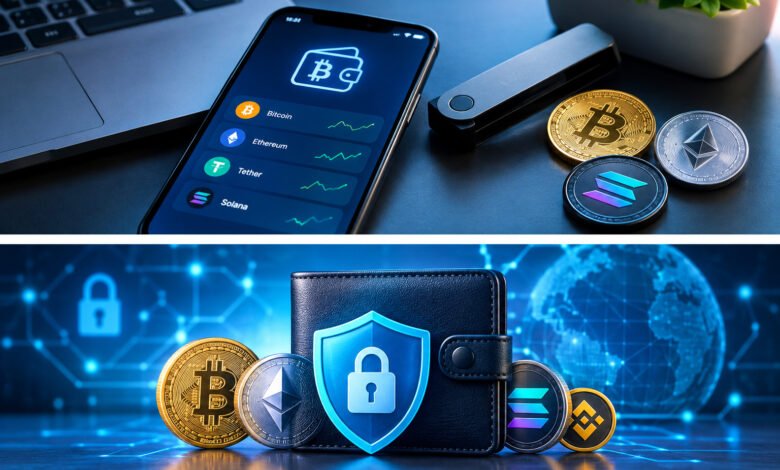
Choosing a crypto wallet can feel confusing, especially when you are new to digital assets. FintechZoom.com Crypto Wallet is a useful search topic for understanding how crypto wallets work, what features matter, and how users can protect their digital assets. FintechZoom’s crypto coverage explains important ideas such as private keys, hot wallets, cold storage, 2FA, and wallet security. The goal is not simply to find a wallet, but to understand how it works and choose a storage method that fits your needs.
What Is a Crypto Wallet?
A crypto wallet is a tool that helps users manage access to their digital assets. It does not store cryptocurrency in the same way that a physical wallet stores cash. Instead, it manages the cryptographic keys used to control assets recorded on a blockchain.
This difference is important for beginners. Your coins remain recorded on the blockchain, while the wallet helps you prove ownership and authorize transactions. FintechZoom explains that private keys are central to this process, so protecting them should always be a priority.
Understanding the FintechZoom Wallet Topic
The FintechZoom.com Crypto Wallet topic covers several parts of crypto storage rather than one simple feature. These include wallet access, security, private-key protection, hot and cold storage, and the way users manage digital assets.
FintechZoom’s broader crypto material also explains how wallets fit into buying, storing, and using cryptocurrencies. It notes that users may keep assets with an exchange or transfer them to a personal wallet, depending on their needs and security preferences.
Key Features to Understand
A good crypto wallet should offer useful tools without making security difficult. The most important features are usually connected with access, protection, recovery, compatibility, and ease of use.
Before choosing any wallet, look at how it handles private keys, what assets it supports, whether it provides extra security, and how you can recover access if your device is lost.
Private-Key Management
The private key is one of the most important parts of a cryptocurrency wallet. It allows the owner to control assets connected with a blockchain address.
For this reason, private keys should remain secret. FintechZoom’s crypto guidance clearly stresses that users should never share their private keys. Losing control of this information can create a serious access problem.
A wallet should make key management simple while still protecting sensitive information. Users should also understand whether they or a third party control the keys.
Hot Wallet Access
A hot wallet is normally connected to the internet. Common examples include mobile, desktop, and web-based wallets.
The main advantage is convenience. Users can normally open the wallet quickly and make transactions without connecting a separate offline device. This makes hot wallets useful for regular activity.
However, internet access can also increase exposure to online threats. FintechZoom explains that hot wallets are convenient, while cold storage offers a different approach for assets that do not need frequent access.
Cold Storage
Cold storage keeps wallet information away from normal internet-connected environments. A hardware wallet is a common example.
Cold storage can be useful for people who want to keep digital assets for a longer period without needing constant access. The trade-off is convenience. Moving funds may require additional steps compared with a hot wallet.
The important point is that cold storage is not automatically risk-free. Users must still protect their recovery information and physical device.
Two-Factor Authentication
Two-factor authentication (2FA) adds another security layer to accounts that support it. Instead of relying only on a password, the user must provide an additional verification method.
FintechZoom explains several forms of 2FA, including SMS codes, authenticator apps, and hardware-based authentication. It also recommends stronger methods, such as app-based or hardware-based authentication, when available.
For beginners, enabling 2FA on related accounts can be a simple step toward better security.
Recovery Options
A wallet should provide a clear way to restore access when a device is lost, damaged, or replaced.
Many self-custody wallets use a recovery or seed phrase. This information can be extremely sensitive because it may restore access to the wallet.
Never share a recovery phrase with another person or enter it into an unknown website. A support representative should not normally need your secret recovery phrase to provide ordinary assistance.
Asset Compatibility
Not every wallet supports every cryptocurrency or blockchain network. This makes asset compatibility an important feature.
Before choosing a wallet, check whether it supports the assets you actually use. A wallet that works well for one blockchain may not support another network.
This is especially important for users who hold several types of digital assets. Checking compatibility first can prevent unnecessary transfers or setup problems.
Simple User Interface
Security is important, but a wallet should also be easy to understand.
A clean interface can help users find balances, addresses, transaction history, and security settings without confusion. Beginners should avoid choosing a wallet simply because it has many advanced features.
A simple design can reduce mistakes, especially when confirming transaction details.
Read More: epleys.com
Security Should Come First
Security is one of the strongest themes in FintechZoom.com Crypto Wallet coverage. The site discusses measures such as 2FA, secure passwords, software updates, private-key protection, and offline backups.
FintechZoom also recommends keeping larger amounts away from hot wallets when appropriate and using cold storage for longer-term holdings.
Still, technology alone cannot protect every user. Good security also depends on personal habits. A secure wallet can become unsafe if someone gives a recovery phrase to a scammer or connects to a fake website.
In Short
The main value of FintechZoom.com Crypto Wallet information is that it helps readers understand the ideas behind digital-asset storage. The most important features include private-key control, hot and cold storage, 2FA, recovery options, asset compatibility, transaction tools, and security practices.
A wallet is more than an app or physical device. It is part of the system that gives you control over blockchain assets. Understanding that responsibility is just as important as choosing the technology itself.
FAQs
What is FintechZoom.com Crypto Wallet?
The term refers to FintechZoom’s educational coverage of cryptocurrency wallets, including wallet types, security, private keys, and storage methods.
Are crypto wallets used to store coins?
Not exactly. Cryptocurrency remains recorded on a blockchain. A wallet manages the keys that allow users to access and control their assets.
Are hot wallets safe?
Hot wallets can be useful and convenient, but their internet connection creates additional online exposure. Strong security practices are important.
What is the safest wallet type?
There is no universal answer. Cold or hardware storage can reduce some online risks, while hot wallets offer greater convenience for regular transactions.
What should I never share?
Never share your private key or recovery phrase. Anyone who obtains sensitive recovery information may be able to gain control of the associated assets.
