

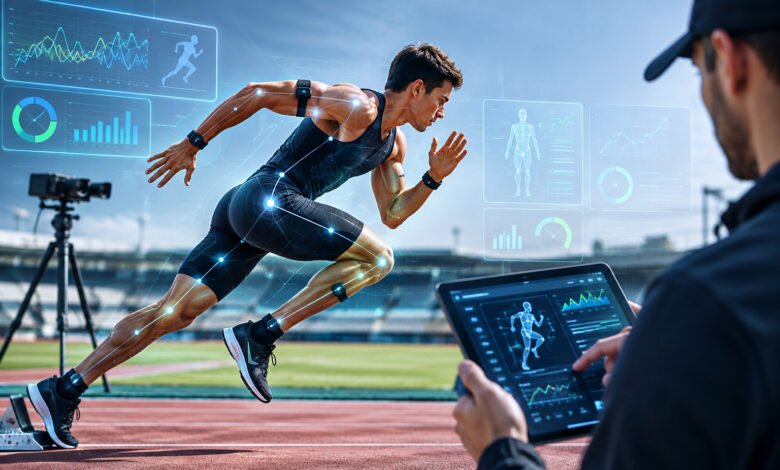
Harmonicode Sports is an emerging term linked with sports technology, performance analytics, biomechanics, sensors, and artificial intelligence. Online sources describe it as a way to study athletic movement and performance through data rather than relying only on observation. Some descriptions focus on rhythm and movement, while others discuss AI, audio signals, wearable sensors, and predictive analytics. Because the term does not have one widely accepted industry definition, it is best understood as a developing concept that connects sports performance with modern data analysis.
What Is Harmonicode Sports and How Does It Work?
Harmonicode Sports combines ideas from sports science and digital technology. The main goal is to turn information about movement, training, and performance into useful feedback. Online descriptions mention biomechanics, motion tracking, machine learning, and rhythmic patterns as important parts of this approach.
A typical process starts with collecting data from training sessions. Information can include movement, speed, acceleration, workload, timing, and other performance signals. The data is then cleaned and analyzed so coaches can see patterns that may be difficult to notice during a normal practice session.
How Performance Analytics Supports Better Training
Performance analytics helps coaches move from simple observation to measurable training decisions. Instead of only asking whether an athlete performed well, analytics can examine how that performance happened and whether it is changing over time.
For example, repeated sessions can be compared to identify improvements in speed, reaction time, technique, or consistency. This information can help coaches adjust drills and training intensity. The wider Harmonicode concept also connects time-series analysis with repeating patterns in training and recovery data.
Which Sports Performance Metrics Can Be Tracked?
Different sports require different measurements, but several metrics can provide useful information across many activities. These may include speed, reaction time, agility, power, movement timing, workload, balance, and technique consistency.
The value of these measurements comes from looking at trends instead of one isolated result. A single score may say little, while several weeks of consistent data can reveal a meaningful performance pattern.
How Biomechanics Improves Movement Analysis
Biomechanics focuses on how the body moves. In sports, small changes in posture, balance, timing, stride, or joint movement can affect efficiency and technique. Technology can help capture these details through motion sensors, cameras, and other measurement systems.
The Harmonicode Sports website describes biomechanical analysis and motion tracking as important parts of its proposed approach. The goal is to provide more detailed information about movement so athletes and coaches can understand technique and identify areas that may need improvement.
How AI and Machine Learning Support Sports Training
Artificial intelligence can process large amounts of sports data faster than manual analysis. Machine learning can look for patterns in historical information and help identify changes in performance, workload, or movement.
Some Harmonicode-related material describes combining sensor information with audio and movement signals. The proposed system can identify events, analyze technique, and show trends over time. These capabilities could help coaches review sessions more efficiently. However, AI should support professional judgment rather than replace the coach or sports specialist.
How Wearable Technology Enables Real-Time Feedback
Wearable technology is becoming an important part of modern sports analytics. Sensors can collect information while an athlete trains, allowing performance to be reviewed during or after a session.
In the Harmonicode concept, wearable sensors may work with other data sources to create a more complete picture of movement and performance. Real-time feedback can help athletes understand technique sooner, while post-session analytics can reveal longer-term trends. Sensor calibration and consistent placement are important because poor-quality data can produce unreliable results.
How Coaches Can Use Data for Personalized Training
Every athlete has different abilities, habits, training history, and development needs. For this reason, personalized training is one of the most useful applications of sports analytics.
Coaches can compare an athlete’s current results with their own previous performance instead of relying only on general benchmarks. Data can help identify areas that need more practice and areas that are already improving. The wider concept of Harmonicode Sports emphasizes using individual performance information to create more targeted training decisions.
Can Harmonicode Sports Help With Recovery and Injury Prevention?
Sports analytics can help identify changes in workload, movement patterns, or performance consistency that deserve attention. Tracking these changes over time may help coaches recognize when an athlete needs adjustments to training or recovery.
However, analytics should not be treated as a medical diagnosis. An unusual measurement does not automatically mean an injury is present. Qualified healthcare and sports professionals should make decisions about injuries and rehabilitation. Harmonicode-related sources also emphasize human oversight, data quality, and responsible use of athlete information.
Read More: epleys.com
How Harmonicode Sports Applies to Esports Performance
The concept can also extend beyond traditional physical sports. Esports performance analytics can examine areas such as reaction speed, decision-making, accuracy, consistency, and gameplay patterns.
This shows why sports analytics is broader than measuring running speed or physical strength. Digital competition also produces large amounts of performance data that can be studied to understand strengths and weaknesses. Harmonicode Sports-related material specifically discusses analytics for esports teams and competitive gaming.
What Are the Limitations and Future Possibilities?
The biggest limitation is that Harmonicode Sports does not have one universally accepted definition. Different online sources describe it as a sports-technology platform, a performance-analysis framework, or a rhythm-focused sports concept. This means readers should distinguish between documented technology and broader claims about what the term could represent.
Data quality is another major issue. Poor sensor placement, inconsistent training sessions, limited historical data, and incorrect labeling can reduce the value of analytics. Privacy also matters because athlete data can be sensitive. Future systems may combine AI, biomechanics, wearable sensors, and predictive analytics more closely, but human expertise will remain important when turning data into practical decisions.
FAQs
What is Harmonicode Sports?
It is an emerging sports-technology concept connecting performance analytics, biomechanics, sensors, AI, and movement analysis.
What data can Harmonicode Sports analyze?
It may involve speed, reaction time, workload, movement, timing, balance, technique, and other performance signals.
Can it help athletes improve performance?
Data analysis can help identify patterns and areas for improvement, especially when combined with qualified coaching.
Is Harmonicode Sports only for physical sports?
No. Related material also discusses esports analytics, including reaction speed, decision-making, and gameplay performance.
Is Harmonicode Sports an established industry standard?
No single industry-wide definition has been established. The term is used online for several related sports-technology concepts.

